
What should a software company's website include?
By the time someone books a demo, they have usually read your product pages, checked that you connect to the tools they already use, looked for a security page and found the price. When one of those is missing, the first call starts with doubts. A complete website answers them beforehand:
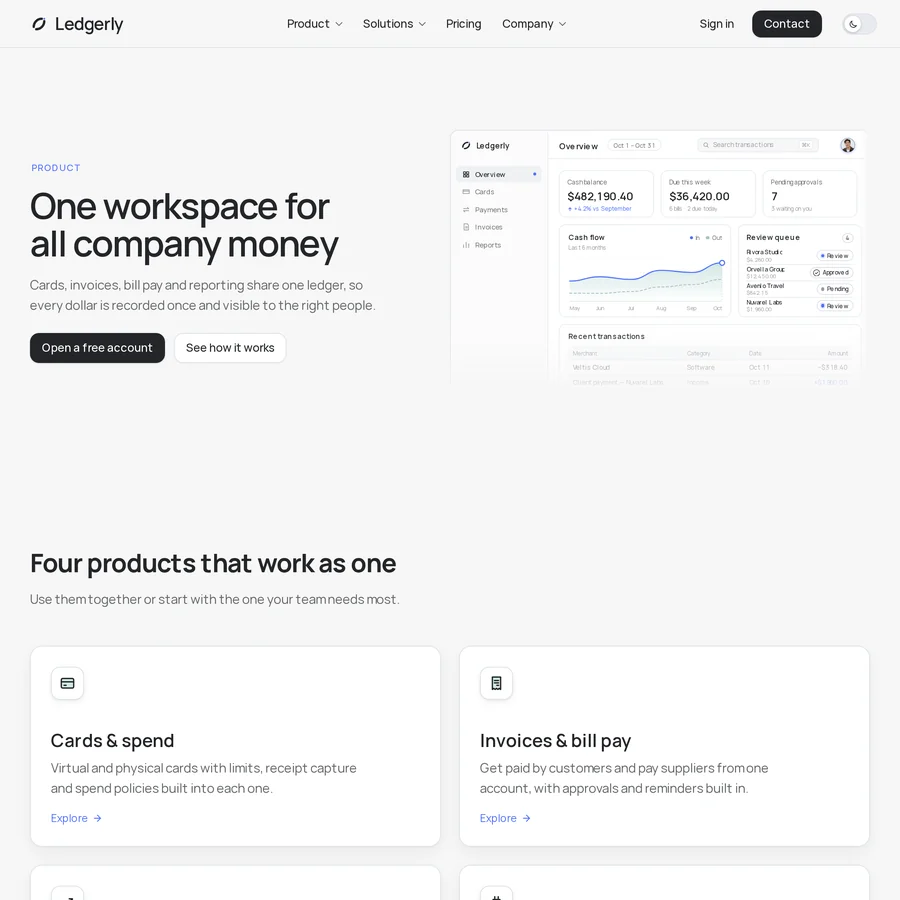
- Products: an overview of how your products work together, and a page for each one.
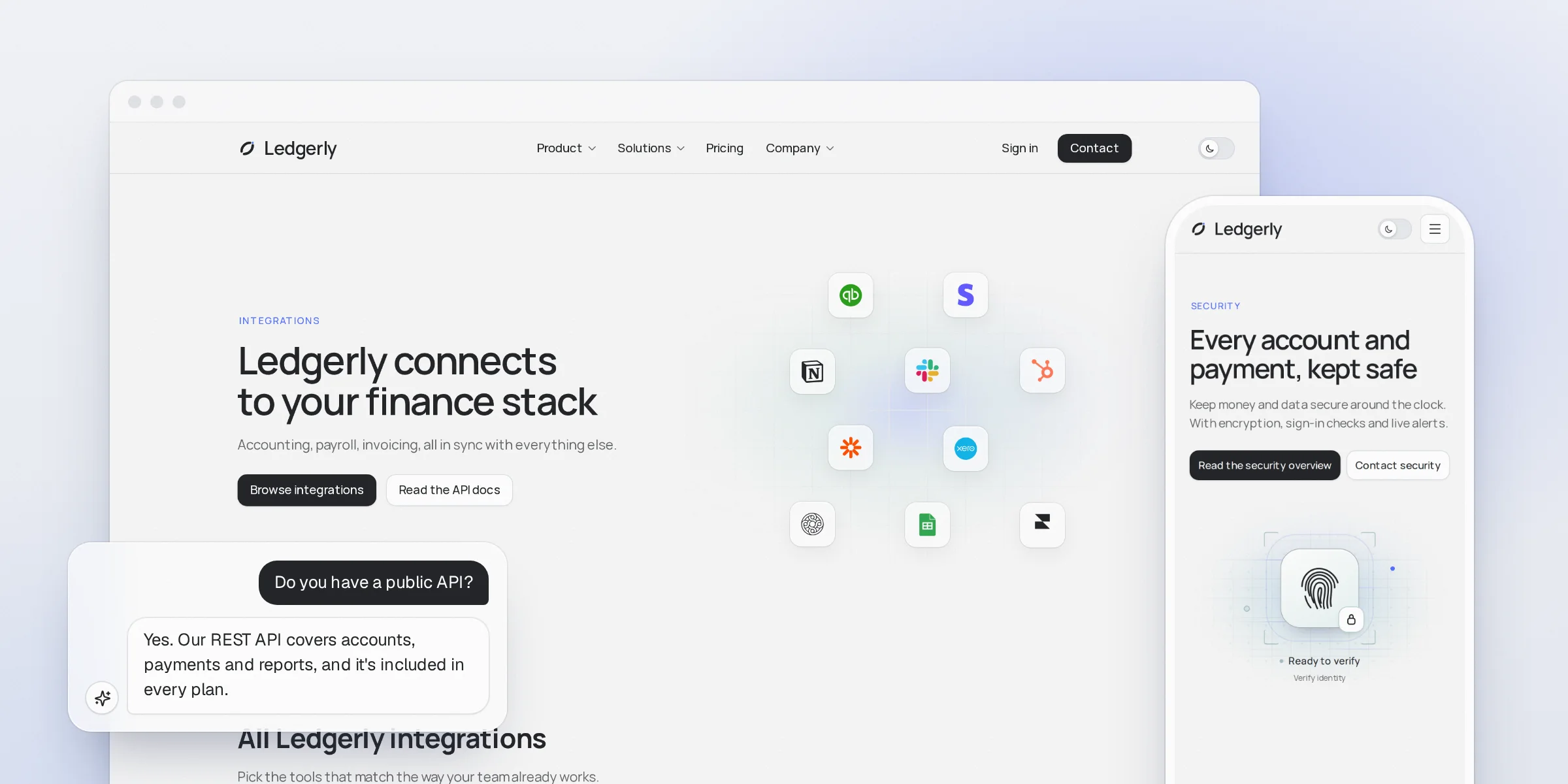
- Integrations: a directory of every integration, plus a section for building on your API.
- Security: safeguards, how a transaction is verified, compliance and a security FAQ, written for the person doing the review.
- Pricing: three plans, a monthly and yearly switch, currencies and a comparison table.
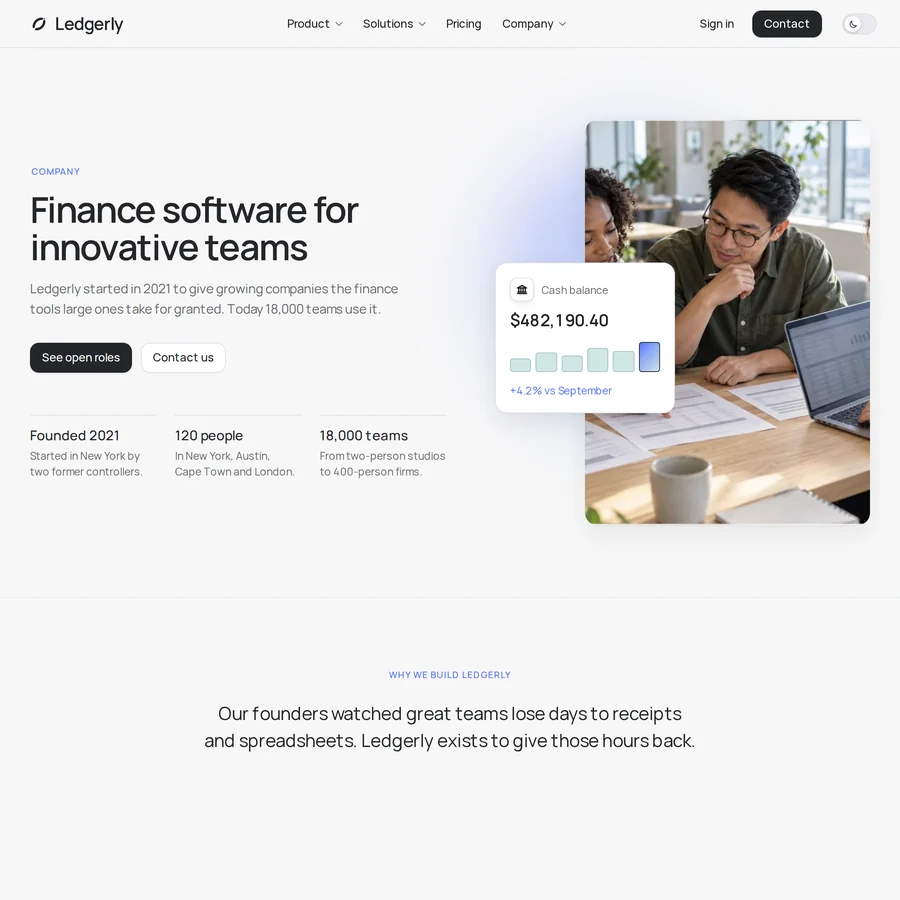
- Company and Careers: milestones, the team, offices, how you hire and the open roles.
- Blog, FAQ, contact, sign-in and a 404 page that keeps people on the site.
Hiring through your website
Tech companies hire through their website as much as they sell through it. Ledgerly's careers page explains how you hire and lists open roles from a CMS collection with 4 sample roles, each on its own page, so a new job is a new entry in the collection. The company page carries the milestones, the people and the offices that candidates look for.
IT and technology consultancies
The same structure suits IT consultancies and technology service firms. The product pages become your services, solutions become the sectors you work in, customer stories become case studies, and the integrations page lists the platforms you specialise in.
An AI assistant for technical questions
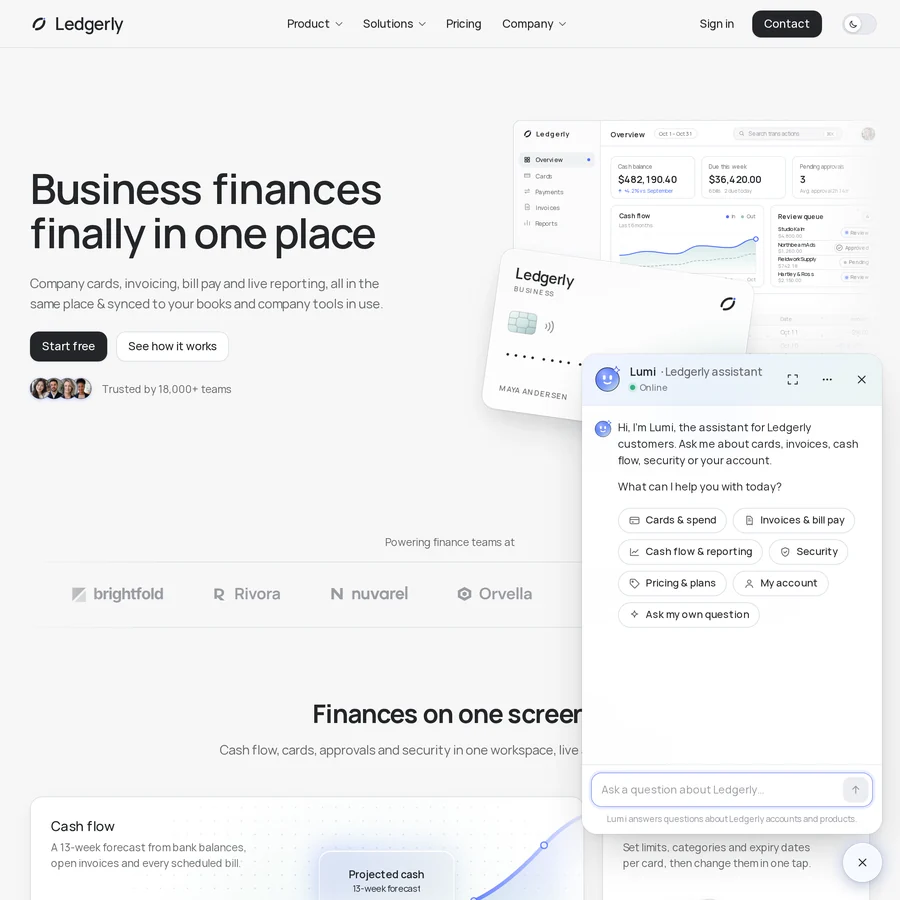
Ledgerly comes with Lumi, an AI assistant built into the template. Visitors open it from the button in the corner of the page and ask their questions without leaving it. Lumi answers from a list of questions and answers that you write, so it works the moment you publish, with no setup and no AI costs. Having a developer build an assistant like this into a website is usually a project of its own; in Ledgerly it is designed and ready, and its answers are text you edit.
Technical buyers ask specific questions early: whether you have an API, where data is hosted, which tools you integrate with and whether you support single sign-on. Lumi answers those from your text at any hour and passes anything else to your team by email.
Do you have a public API?
Yes. Our REST API covers accounts, payments and reports, and it's included in every plan. You'll find the documentation and your API keys under Settings.
Making it yours takes three steps, and the setup guide covers each one: give it your name and welcome message, paste in your own answers or let the included AI editing skill write them from your FAQ page, and add your support email and hours. If you want Lumi to answer with a live AI model, the guide includes the server code and the steps to connect it, and we help by email if you get stuck.
How to set up Ledgerly for a software company
- Set your colours, fonts and logo in Framer's styles. Every page follows, in the light and the dark theme.
- Rename the product pages after your products and swap in your screenshots.
- List your integrations and link the API section to your documentation.
- Write the security page for the person who reviews your product.
- Add your open positions to the open roles collection. Each one gets its own page.
- Give Lumi your answers, connect your domain and publish.
What it costs
Ledgerly is $79, paid once, for one website, yours or a client's. A free Framer account is enough to remix and edit it; publishing on your own domain takes a Framer site plan that includes the CMS, paid to Framer. With it you get a setup guide that covers every page, the AI editing skills, Lumi's server code, free updates for as long as the template exists and email support from us, the studio that built it.